Contact us below or call/text us at 508-746-9200.
Custom Printed Wall Murals: Materials, Applications, and What to Plan For
Custom wall murals turn a blank wall into a working part of a building. A custom printed wall mural is large-format artwork digitally printed on wall-grade vinyl, textured media, or wallcovering. It is sized to one specific wall and installed in panels. A mural can carry a brand, tell a school's history, or recognize the people who built a company.
Custom Printed Wall Murals for Commercial and Residential Applications
Zebra Visuals designs, prints, and installs custom wall murals for businesses, schools, and organizations. Its clients range from Plymouth to Boston and across the South Shore and Cape Cod. Because Zebra is a full-service sign company, each mural is planned as part of the space around it. That includes the signs, letters, and plaques that may be mounted on top of it.
What a Printed Mural Does That Paint Cannot
Printed murals provide a number of benefits that you can't achieve with a traditional painted mural.
Reproduce Photographic-Level Detail
Printed murals reproduce photography, fine lettering, and gradients at full wall scale. A team photo looks as sharp on a 20-foot wall as it does on screen.
Match Specific Brand Colors
Colors are matched to brand standards. The same file can be reprinted for a second location or a replacement panel.
Faster Installation Times
Most of the work happens in the shop. Installation is short, which limits disruption in an occupied office, school, or restaurant.
More Cost-Effective to Change or Update
Removable materials suit leased spaces and brands that change. A mural can be replaced when a lease ends or a campaign runs its course.
Commercial Applications for Printed Murals
Branded Wall Graphics
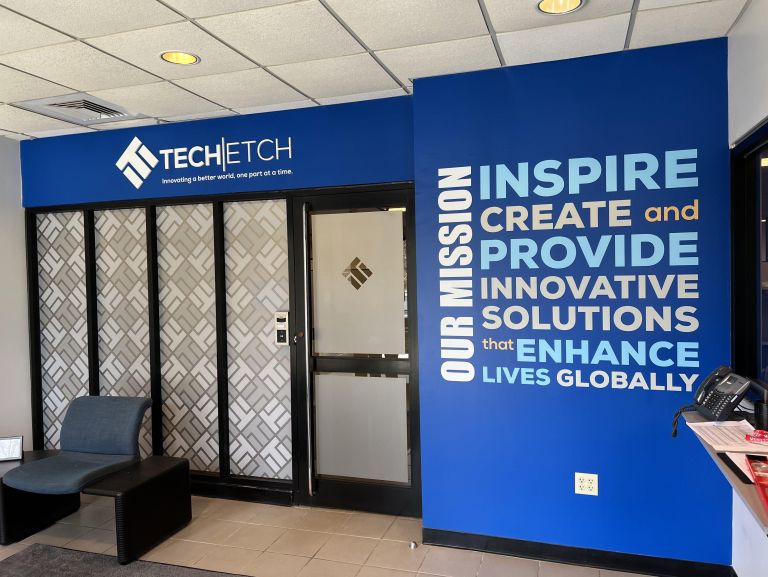
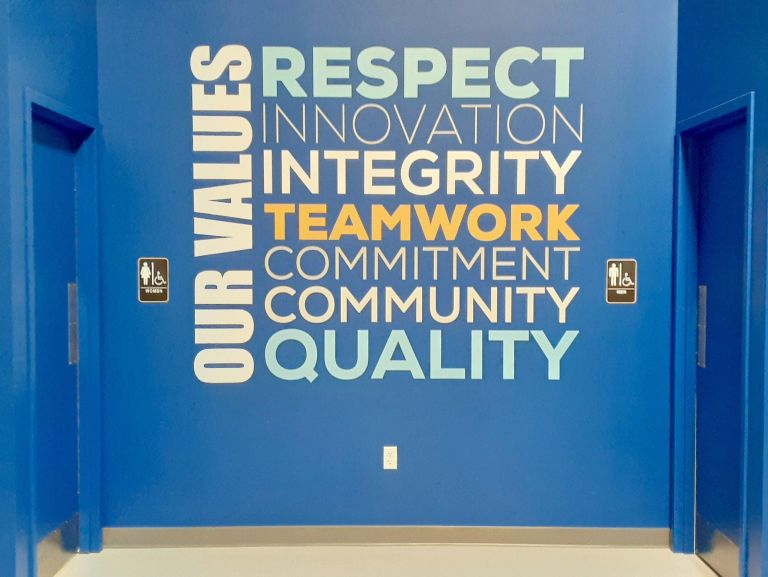
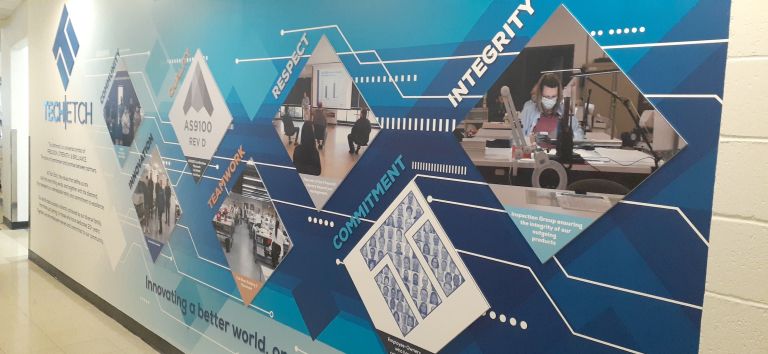
At Tech Etch, an employee-owned precision manufacturer in Plymouth, Zebra Visuals created a Commitment to Excellence wall that pairs a printed mural with dimensional pieces. The dimensional pieces can be replaced individually, which keeps the mural fresh and interesting without reprinting the wall. It is placed inside the building where employees see it every day and where visiting customers and potential clients take it in.
This is where a printed wall does its best work: a lobby, corridor, or reception area where clients, staff, and guests form their first impression. Zebra's interior signs and graphics are often planned alongside these walls, so directories, room signs, and murals share one visual system.
Recognition, Awards, and Inspirational Graphics
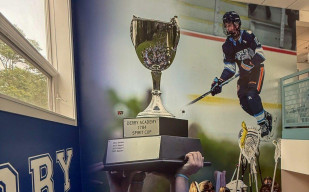
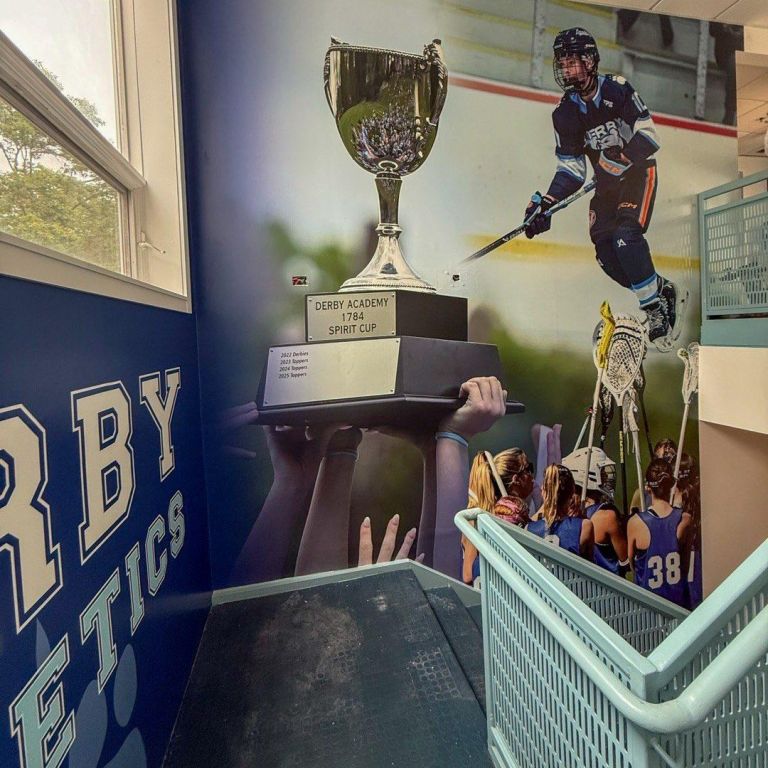
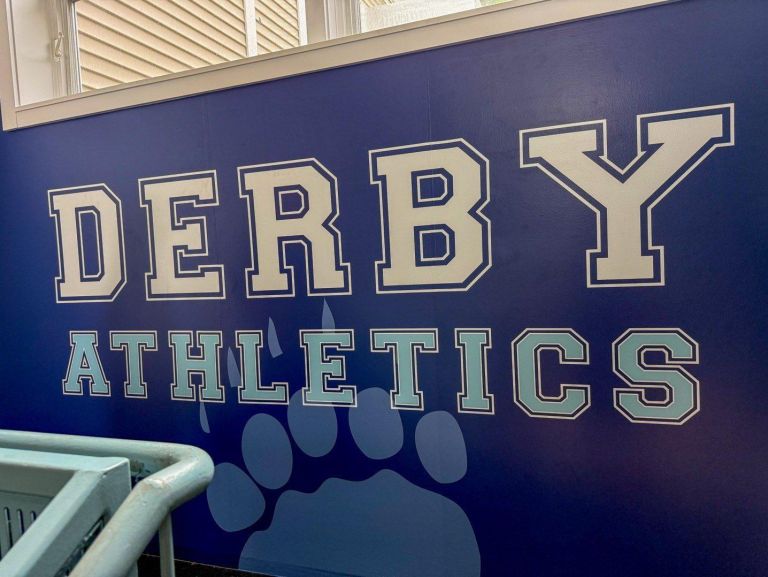
Derby Academy in Hingham was founded in 1784. At the school, Zebra Visuals turned a stairwell into a display of school spirit. One wall carries "Derby Athletics" in varsity lettering over a bear paw. The adjoining wall combines photography of hockey and lacrosse players with the school's Spirit Cup, printed at a scale that makes a climb up the stairs feel like an event.
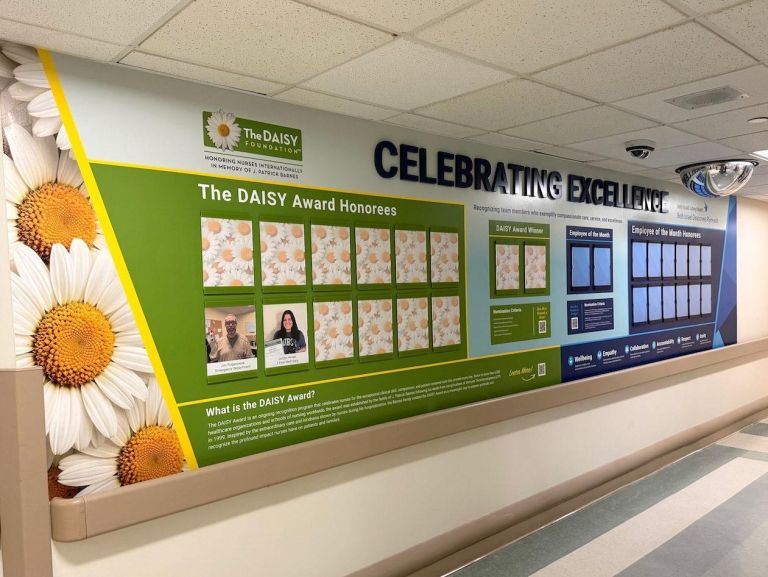
At Beth Israel Deaconess Hospital in Plymouth, a Celebrating Excellence wall honors employees and nurses. The design combines a printed mural with dimensional letters and photo holders, and the hospital's brand colors run through every element. The wall sits near the cafeteria, where it gets maximum exposure to employees and visitors throughout the day.
Residential Applications
While most of Zebra's mural work is commercial projects, the same materials and planning apply to homes, especially projects led by an interior designer or custom builder.
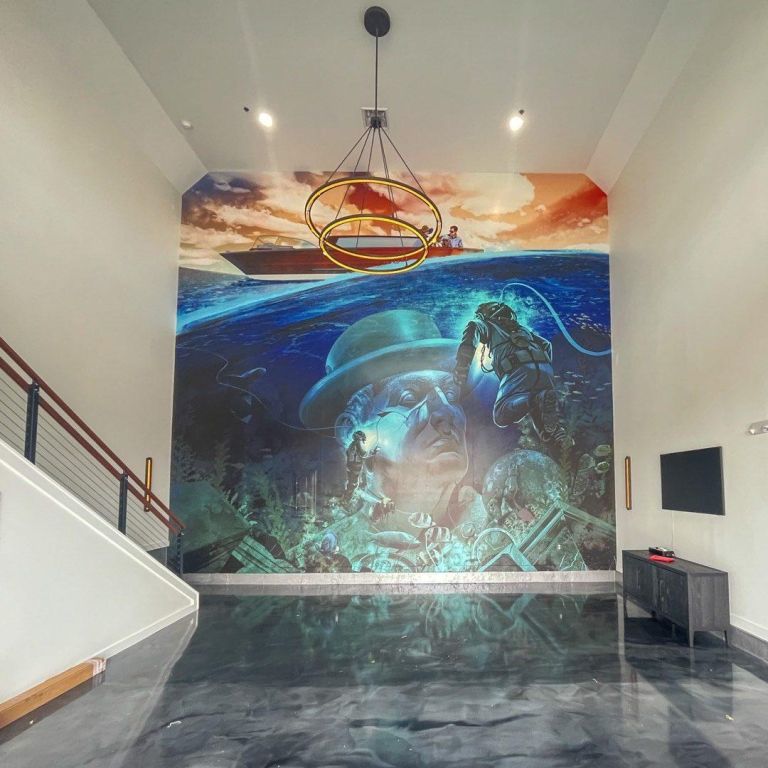
Home theaters, game rooms, man caves, and finished garages are natural fits. In one project, a two-story wall carries an underwater scene. A vintage wooden boat sits on the surface, and divers below explore a sunken statue. The mural runs floor to ceiling, and a polished floor reflects it back into the room.
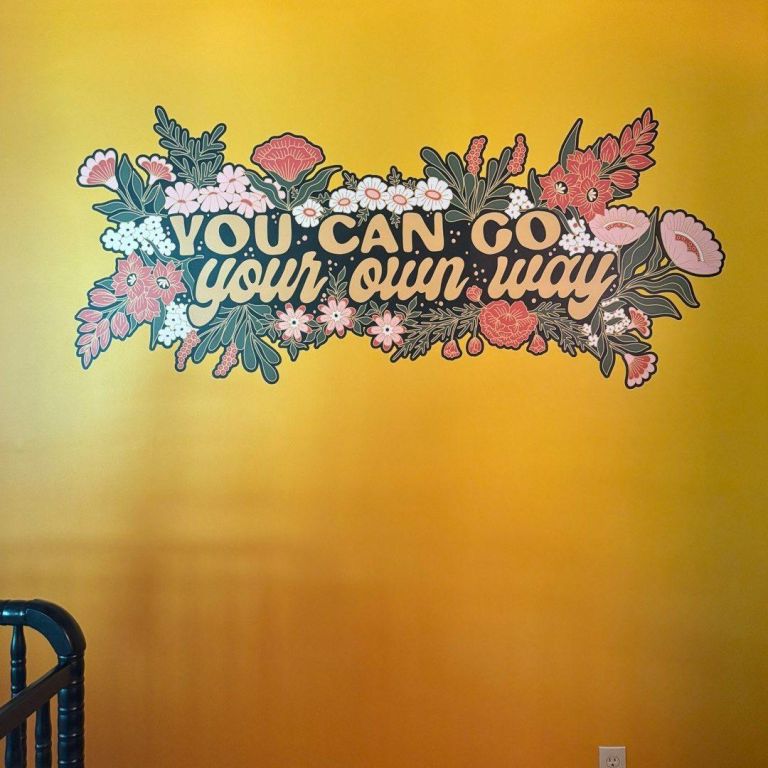
Nurseries and children's rooms are another use. A hand-lettered floral design on a painted accent wall gives the room a focal point. A removable material means the design can change as the child grows.
The same approach works for employee recognition. Companies use printed walls to show milestones, team photos, founding stories, and company values. These walls can be planned alongside donor plaques and recognition displays so the whole space shares one design language.
Other common spaces
- Workplaces. Reception and lobby walls, conference rooms, break rooms, and cafés.
- Healthcare and education. Medical and dental waiting rooms, school hallways, and gyms.
- Hospitality and retail. Restaurant feature walls and retail displays.
Seasonal businesses, common to Cape Cod, Plymouth, and the South Shore, can also use removable murals to refresh an interior before the summer season.
Choosing the Right Material for Printed Wall Murals
Zebra Visuals prints on a variety of materials. We recommend the right one based on four factors: the wall surface, the lighting, the amount of traffic, and how long the mural needs to stay up.
Flat vinyl, gloss finish.
Rich, saturated color that wipes clean easily. Gloss can show glare near windows or under direct lighting, so placement matters.
Flat vinyl, matte finish.
Reduces glare and reads well under office lighting. A strong choice for lobby and brand walls that will be photographed.
Textured materials.
Canvas and similar textures give a mural the look and feel of a fine art print or traditional custom printed wallpaper. Texture adds depth to artwork and photography and can help disguise minor wall imperfections.
Privacy films.
Frosted and decorative films carry the same design approach onto glass walls and doors.
For high-traffic areas like stairwells and hallways, a protective laminate adds durability and makes cleaning easier.
Extending the Design Onto Glass
Glass conference rooms, office fronts, and interior doors are wall surfaces too. Privacy film gives them the same custom treatment as a printed wall.
Frosted film blocks direct sightlines into meetings while still letting in light.
Common design options include:
- Logos. Cut out of the frost so they appear in clear glass, or printed directly onto the film.
- Bands and gradients. Bands at eye level, or gradients that fade from frosted to clear.
- Etched-glass looks. Full-coverage patterns that imitate etched glass.
Zebra Visuals also added frosted privacy vinyl at Tech Etch as part of a larger interior program across the company's facilities, which included printed wall graphics and dimensional letters. The full scope is covered in our Tech Etch case study.
Murals as a Backdrop for Dimensional Letters and Plaques
Most print shops stop at the wall. Zebra Visuals is a sign company, so a mural can be designed as the base layer for dimensional letters, logos, signs, or plaques mounted on top.
Both the Tech Etch and Beth Israel Deaconess walls were designed this way, with the printed mural as the base layer for dimensional pieces. After the printed wall is installed, a paper template marks the exact position of each dimensional letter. Mounting studs on the back of each letter line up with holes drilled through the template, so every letter lands where the design placed it.
Planning this in advance matters:
- Mounting positions are set during design, so the pattern behind a letter supports it rather than competing with it.
- Letter depth, color, and finish are chosen to stand out from the printed background, such as white letters over a dark tonal pattern.
- Fixed items like exit signs, thermostats, switches, and door frames are mapped before printing, so the design works around them.
- Plaques and donor recognition can mount over a printed background that tells the larger story.
The result is a wall with real depth. It is designed as one piece, not a print and a sign that happen to share a surface.
Paint Prep and Adhesion: What to Plan For
Many wall mural problems start with the wall, not the print. These are the conditions that matter most. If Zebra Visuals is involved before the walls are painted, we can recommend primers that support adhesion. We can also run adhesion tests with different vinyl materials to confirm the right combination of material and paint.
Paint cure time.
Fresh paint feels dry within hours but keeps curing for weeks. Vinyl applied too early can trap gases released by the paint. That can weaken the adhesive or bond it permanently to the wall. Film manufacturers generally recommend waiting at least three weeks after painting.
Low-VOC and specialty paints.
Many newer paints are low in VOCs (volatile organic compounds), and some include additives that resist stains, scuffs, or mildew. These features are good for the building, but they can make it harder for vinyl adhesive to grip. Results vary by paint brand and film. No single film performs best on every paint.
Paint sheen.
Smooth satin, semi-gloss, and gloss paints generally accept vinyl more reliably than flat or matte finishes.
Surface condition.
Holes, dents, and patches show through vinyl, so walls should be repaired and primed before painting. Brick, block, and heavily textured walls need specialty materials.
Image quality.
A photo that looks sharp on a laptop may not hold up at 10 feet wide. Zebra reviews files early and advises on resolution or alternatives before design is finalized.
Adhesion testing.
Zebra Visuals tests adhesion on site as part of its process. A test with the chosen material on the actual wall confirms the film will hold before production begins, and it guides the choice of material and wall prep.
For new construction and renovations, the best time to plan is before the walls are painted. When architects and interior designers plan mural walls early, the paint can be specified to suit the graphics. That avoids repainting later.
How Zebra Visuals Approaches a Mural Project
Zebra Visuals has designed signs and graphics from Plymouth since 1994. Owner Paul Luszcz is an Industrial Designer, and clients work with him directly from the first conversation. That perspective shapes how a mural is planned: as part of a space, with the signs, lighting, glass, and fixtures around it considered from the start.
Each project follows Zebra's design-through-installation process:
- Assess goals and wall conditions.
- Present design and material options.
- Test adhesion.
- Print.
- Install.
Artwork stays on file, so a damaged panel can be reprinted or a mural updated without starting over.
A blank wall is often the largest open surface in a room. Planned well, it becomes the part of the space people remember.
Ready to transform your space with a custom mural?
Schedule a free consultation to discuss your ideas. Contact us here or call us at 508-746-9200.
Frequently Asked Questions
Cost typically depends on five factors:
1. The size of the wall.
2. The material selected.
3. The amount of design work.
4. The condition of the wall.
5. How complex the installation is.Tall walls, glass, obstacles like doors and fixtures, and dimensional letters mounted over the print all add time. Zebra Visuals reviews the space, the goals, and the budget, then recommends material options that fit.
Common options include:
• Flat vinyl in a gloss or matte finish.
• Textured materials with a canvas feel.
• Frosted and decorative privacy films for glass.Gloss offers rich color, while matte reduces glare. Textured materials give a wallpaper or fine art look and can help hide minor wall flaws. Zebra Visuals recommends a material based on the wall surface, lighting, traffic, and how long the mural will stay up.
Removable vinyl materials are designed to come off cleanly. They are a good fit for leased spaces, seasonal updates, and brands that change. Clean removal also depends on the paint underneath and how the wall was prepared. That is one reason Zebra Visuals tests adhesion on site before production and recommends a material suited to the wall and to how long the mural needs to stay in place.
Fresh paint needs time to cure, and manufacturers generally recommend waiting at least three weeks after painting before applying vinyl. Low-VOC paints and paints with stain- or scuff-resistant additives can reduce adhesion, and results vary by paint and film. If Zebra Visuals is involved before painting, we can recommend a primer that supports adhesion. Zebra Visuals tests adhesion on the actual wall before printing. That test guides the material choice and any wall prep the project needs.
Yes. A printed mural can serve as the backdrop for dimensional letters, logos, signs, or plaques. Mounting positions are planned during design, and templates guide the installation so each piece lands exactly where it belongs. As a full-service sign company, Zebra Visuals designs the mural and the mounted elements together. The layers work as one wall instead of competing with each other.
Large walls need large, high-quality files. Photos that look sharp on screen can appear soft when printed several feet wide. Vector logos and original, full-size photography work best. Zebra Visuals reviews artwork early in the project and advises on whether files will hold up at the planned size. If they will not, Zebra suggests alternatives such as new photography, illustration, or pattern-based designs.
Smooth, painted drywall is the most common surface. Brick, block, and heavily textured walls can take a mural, but they need specialty materials and more installation time. Glass walls and doors use privacy films, which can be frosted, printed, or cut to show logos in clear glass. Zebra Visuals assesses the surface and recommends a material to match.
Keep Reading
Get a Quote
Contact Us